Long Beach & nearby
Bee, Wasp & Hornet Removal
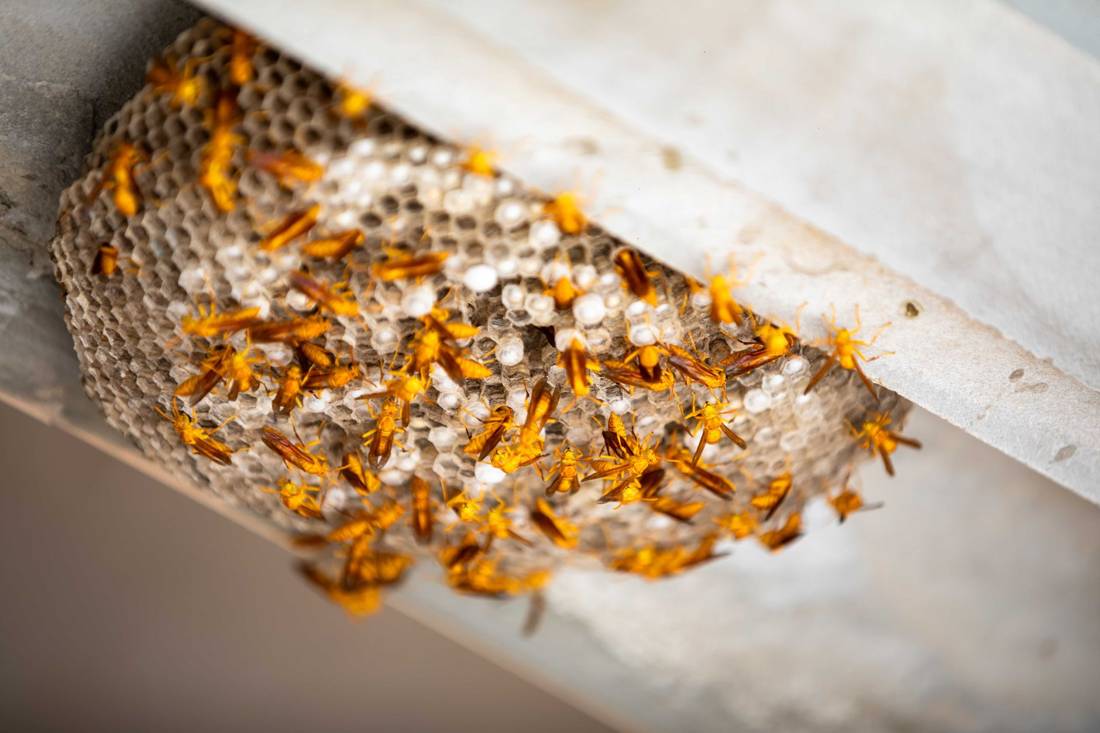
Nests under eaves, in walls or in sheds put people and pets at risk. We remove wasp and hornet nests safely and point honey bee colonies toward relocation.
About this pest
Bees, wasps, and hornets are a common concern for homeowners, especially during warmer months when their activity increases. While some species are beneficial pollinators, others can be aggressive and deliver painful stings that may cause allergic reactions. Identifying the type of stinging insect and its nesting habits is the first step toward effective and safe removal from your property.
Attempting to remove a nest on your own can be dangerous, potentially leading to multiple stings. Professional pest control companies have the necessary tools and knowledge to safely and thoroughly eliminate these pests. They can also advise on preventative measures to deter future infestations, helping to maintain a safer outdoor environment for everyone.
Around Long Beach
In Long Beach and coastal Southern California, the mild Mediterranean climate means stinging insects can remain active throughout much of the year, with populations peaking in warmer months. Homes, from older bungalows with crawl spaces to modern stucco homes, offer various nesting sites. Bees, wasps, and hornets seek shelter in eaves, attics, and wall voids. The presence of flowering plants and outdoor living spaces common in the region also provides abundant food sources, making professional removal and preventative measures important for resident safety.
Choices
Treatment options
Direct Nest Treatment
This method involves applying a specific product directly to the nest to eliminate the colony. It is effective for visible nests and provides a quick resolution to the problem. Safety precautions are taken to protect people and pets during this process.
Baiting Systems
For certain species, baiting systems can be used to attract insects away from your home and deliver a slow-acting treatment back to the colony. This can be useful for nests in hard-to-reach locations.
Exclusion Techniques
Sealing cracks, gaps, and other potential entry points helps prevent stinging insects from building nests inside your home's structure. This is a long-term solution to reduce indoor infestations.
Habitat Modification
Removing overgrown vegetation, standing water, and other attractants around your property can make your yard less appealing to bees, wasps, and hornets, reducing the likelihood of nests forming near your home.
Step by step
What the visit involves
- 1
Initial Inspection
A thorough inspection identifies the type of stinging insect, nest location, and extent of the infestation. This step helps in planning the most effective removal strategy for your specific situation.
- 2
Safe Nest Removal
Using appropriate safety equipment and methods, the nest is carefully removed. This minimizes risk to residents and prevents the insects from returning to the same spot.
- 3
Treatment Application
Targeted treatments are applied to eliminate any remaining insects and deter new ones. This may involve dusts, liquids, or other specific products depending on the pest.
- 4
Preventative Advice
Recommendations are provided on how to prevent future infestations. This includes sealing entry points and managing outdoor attractants around your home.
Questions
Common questions about bee, wasp & hornet removal
What is the difference between bees, wasps, and hornets?
Bees are generally hairy and collect pollen, often nesting in hives or underground. Wasps are smoother, have a more defined 'waist,' and can be predatory or parasitic, building paper nests or mud tubes. Hornets are a type of large wasp, often more aggressive, and build large paper nests in trees or structures.
Why are stinging insects attracted to my property?
They are often attracted to food sources like sugary drinks, ripe fruit, and pet food, especially during outdoor gatherings. Nesting sites like sheltered areas under eaves, in trees, or within wall voids also draw them in. Water sources, even small amounts, can also be an attractant.
Can I remove a stinging insect nest myself?
Attempting to remove a nest on your own can be dangerous and lead to multiple stings, especially if you are allergic. Stinging insects can become aggressive when their nest is disturbed. It is safer to contact professionals who have the proper equipment and knowledge to handle the situation.
When is the best time to remove a stinging insect nest?
The best time to remove a nest is typically in the early morning or late evening when the insects are less active and most of them are inside the nest. However, a professional can assess the situation and determine the safest and most effective time for removal.
What are you seeing?
Tell us what the pest looks like and where it shows up. A photo helps. We will tell you what it probably is and how to deal with it.